Română
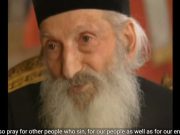








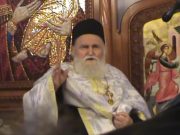




In this recording, Archimandrite Athanasios Mytilinaios (1927–2006) answers a question about what it actually means to live a spiritual life. He explains the difference between our daily biological life and life guided by the Holy Spirit, what our bodies will be like at the resurrection, and how the Apostle Paul divides people into three categories: the natural man, the carnal man, and the spiritual man.
Romanian translation by Elena Dinu
Audio source: “Answers to questions”, no. 490 (in Greek), October 17th, 1991: https://arnion.gr/index.php/diafora-uemata/pantiseis-pori-n-katixitiko
Fr. Athanasios:
Another question: “Could you tell us what the spiritual life means?”
Very well! Here is what “spiritual life” signifies in brief—I will not prolong my discourse, for one could speak extensively on this question: It is the life of the Holy Spirit within the life of the believer! What life do I have of my own, that the life of the Holy Spirit might come to bring it to completion? As a human being, I live—as I mentioned regarding the previous inquiry—according to the human mindset; I live my biological life. Two things I mentioned: the human mind, that is, human reason, but I also live my biological life. This biological existence makes me a biological man.
The Holy Spirit comes and replaces the human mindset with the divine mind. In like manner, the Holy Spirit comes and governs this existence of mine, even these natural laws. This reality is not yet seen. It will be revealed, however, at the resurrection of the dead! Today, in order to live, I must eat.
I am therefore a physiological man, oriented toward mere physical life. “Vita, vita, vita” signifies life. [Audio unclear at 2:02–2:06]: these are established terms, and unless we employ them, we cannot understand one another. Thus, it is a physiological life, an animal life. When we say, “I am hungry,” “I am thirsty,” “I am sleepy,” this is what is called biological life.
At the resurrection of the dead, however, Holy Scripture tells us plainly that our bodies will be spiritual. What does spiritual mean? Immaterial? No! They will be the bodies that were sown in corruption and raised in incorruption.
That is to say, my concrete body will be raised. This occurs in the very concreteness of which the Lord speaks: “Not a hair of your head shall perish.” Did you hear what He said? “Not a single hair.” Thus, we preserve the concrete reality of human nature.
Then, however, human nature will no longer need to eat or drink—take heed to this—yet how will it live? It will live by the Holy Spirit! It will live without the necessity of food: I will neither eat nor drink. This body will be ruled, governed, and sustained not by the physical nourishment God created—bread and all the rest—but by the Holy Spirit. This body is called “spiritual” not because it will be immaterial—it will not be immaterial, as I explained earlier—but because the Holy Spirit will rule, govern, and sustain it.
Therefore, spiritual life means that my own will recedes and the Spirit of God, the will of God, enters in. For the Holy Spirit indwells the Church! The Lord declared: “I will depart, and I will send you another Comforter, the Spirit of Truth.” The Holy Spirit, Who indwells the Church, sanctifies us and imparts His own life to us. Thus we are said to live the spiritual life—namely, the life of the Holy Spirit.
Consider the discipline of fasting, for instance! If fasting is regarded purely from a biological perspective, a person will object: “If you tell me not to eat, it means I will die, for I can no longer sustain my existence.” But the Holy Spirit says: “You shall fast!” The person replies, “But…”, and the Holy Spirit answers: “Yes, you shall fast!” In this way He intervenes—if I may use the word “against” loosely, though it is not strictly so—for the Holy Spirit takes me out of my purely biological state and leads me to another realm, where I begin to live spiritually even within this present biological life.
Take virginity, or continence! A person might ask: “Why? Must things be different?” Yet the Spirit of God directs: “Live in continence, in virginity, and so forth.” Is this not contrary to physiological necessity? Yet this is precisely what spiritual life means.
It is an earnest, as the Apostle Paul calls it—an earnest meaning a pledge or guarantee—the earnest of the life to come, where I will have no such physical necessity and the Holy Spirit will govern my existence. What a magnificent reality this is! The Apostle Paul divides mankind into three categories: the natural man, the carnal man, and the spiritual man. Who is the natural man? As you know, the word “soul” has several meanings.
One meaning is biological life. Scripture records that the earth brought forth vegetation and living souls—animals and living creatures. What is a living soul? It is animated life! Who, then, is the natural man?
He is the one I have spoken of until now: the physiological man, who says, “I will eat and drink to sustain my existence.” Such people are designated by the Apostle Paul in the New Testament as natural men. He states that the natural man perceives nothing concerning the spiritual man. He understands nothing at all! And rightly so, because he remains confined to the physiological realm; how could he comprehend what a spiritual reality, a spiritual life, or a spiritual man is?
Next comes the carnal man. You know that in our day there are a great many natural people, sadly even among our own Christians—natural men who think only: “What shall I eat? What shall I drink?”, and nothing else occupies them. There are many such people, so very many!
Then follows the carnal man. The carnal person is one who possesses spiritual impulses, but has not yet attained maturity; he wavers. He still steps into the sphere of carnal existence and has not yet reached a satisfactory measure of the spiritual man. The Apostle Paul writes: “If we live in the Spirit, let us also walk in the Spirit.” We must, therefore, respond to the requirements of the Holy Spirit. And what if we do not respond?
Those who fail to respond fully are called carnal men. What does the Apostle Paul say to the Corinthians? “You are still carnal.” They had believed; they had been baptized! He does not call them natural, but carnal.
Lastly, there is the spiritual man, of whom I spoke earlier. That is, the one who is submitted to the Holy Spirit, who advances in the Holy Spirit and according to the guidance of the Holy Spirit. This is what it means to be a spiritual man. Thus, in response to the question, “What does the spiritual life mean?”, this is the answer in brief.