Română



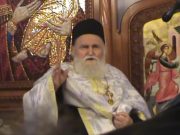


In this episode, Metropolitan Neophytos of Morphou reflects on the Gospel of the Ten Lepers, revealing why gratitude and inner vigilance make a soul known to God. Through personal stories—including the heavenly vision of his grandmother Myrofora and the power of guarding the nous—His Eminence explains how simple acts of faith, forgiveness, and remembrance lead to life everlasting.
This English translation of the sermon of His Eminence Metropolitan Neophytos of Morphou was presented for otelders.org by Porphyrios. This is a sermon of His Eminence Metropolitan Neophytos of Morphou during the Hierarchical Divine liturgy on the 12th Sunday of Luke (the Sunday of the Ten Lepers), celebrated at the Holy Church of Saint George in the village of Evrychou, within the Holy Metropolis of Morphou on January 15, 2023.
Original video: https://youtu.be/S1KmTJz4_Fk
Video on English Morphou channel: https://www.youtube.com/watch?v=3JvLkUZyC7U
🔊 Listen to an English narration of this talk on Spotify and Apple Podcasts: https://open.spotify.com/show/02BTr4socgg9gwLbRZPPLE?si=78f8f270eb3c41e7
Met. Neophytos:
It is for today that our Church has appointed the reading of the Gospel of the Ten Lepers [Luke 17:12-19]. These Ten Lepers were cleansed and healed through their faith in the Lord of life and death: Our Lord, Jesus Christ. [The Ten Lepers] had faith. They trusted that this Jesus who was walking among them in those days — that is, during the time of the New Testament — was not a random prophet. They might even have believed that He was the Messiah, as they saw that He did not merely cure diseases, but also resurrected the dead.
Thus, they trusted that this Jesus could heal them as well, these lepers [who were suffering from] an incurable disease of that time. Indeed, their faith — and faith presupposes trust in the One in whom we believe — gave them the opportunity to communicate with Christ while He was walking next to them. The Gospel says that they kept their distance [“stood afar off,” Luke 17:12], since their disease was contagious. “Have mercy on us, Lord,” they told Him. And He did.
As a matter of fact, in order to test the depth of their faith, He told them: “Go to your priests and let them know that you have been healed.” In other words, to receive a “certificate of health,” as today’s ministries would say. “[Go] and you will be healed.” As soon as they set out to go to the priests and get their “certificate of health,” they discovered along the way that they had been healed. Out of the ten, [only] one remembered that this healing didn’t happen by chance. This wasn’t some kind of chance occurrence. “Yes, we put our trust in Jesus of Nazareth, “and it was His word that healed us.”
One of them, the Samaritan, who was a heretic, thought, “I should go thank Him.” He went and fell at His feet and thanked Him. And [Christ] spoke the well-known words that we all remember: “Were there not ten who were cleansed? “But where are the other nine?” [Luke 17:17]. Was it just one that was cleansed? Where are the other nine? It’s ten that I cleansed. “Arise, go your way. Your faith has healed you” [Luke 17:19].
Do you see what a humble God we have? He didn’t say, “My word, My prayer healed you.” No. He said, “Your faith, My child. “You trusted Me and the Holy Spirit that dwells within Me at all times “healed you, “He cleansed you.” Out of the Three Persons of the Holy Trinity, the Holy Spirit is the One who cleanses. That’s why in the “Heavenly King” prayer we say: “Come and dwell in us and cleanse us from every stain.”
On this occasion which the Church commemorates as “the Sunday of the Ten Lepers,” we always visit our village of Evrychou to serve many memorial services, among them, especially the memorial service for the late Metropolitan of Morphou, Chrysanthos Charigiannis, as well as for many other [departed] loved ones. Those who, throughout the twenty-five years that we have been together, we’ve met, we’ve associated with, we’ve concelebrated with, with whom we have rejoiced, with whom we have wept, with whom we’ve communed the Body and Blood of Christ, “for the remission of sins and unto life everlasting.”
What a great thing it is for our hearts to be filled with gratitude! Our ancestors said, “My son, first show gratitude to God and then to His creatures.” This is what it means to be truly human. Our “humanity” is tested by [the cultivation] of certain virtues that modern European atheism has banished from the lives of modern man. One of these great virtues is gratitude.
It’s no coincidence that [during] the Divine Liturgy, — that is, during the union of earth and heaven in the Holy Spirit — [the Holy Spirit] transforms your offerings, the bread and the wine, into the Body and Blood of Christ, so that we, the unworthy and miserable, may receive them “for the remission of sins” — that is, with our guilt removed because we have repented of our faults and sins; if we indeed have [repented] — “for the remission of sins and unto life everlasting.” To receive a life that doesn’t end at the grave. Eternal, everlasting [life], without “sorrow and sighing” [quoting the Memorial service].
Thus, this union of earth and heaven, what is it called besides the “Divine Liturgy?” “The Holy Eucharist.” You see, we offer “eucharist” [i.e. gratitude] to our God, who was crucified for us, the perfect God and perfect Man, who descended into the grave for us. He was resurrected. He conquered death for us. He conquered our sin. He conquered the devil who tempts us. He raised into heaven the Body that the Most Holy Theotokos lent to Him. He sat at the right hand of the Father. That means, this body, this flesh has been glorified.
Our bodies become dirt, soil. This couldn’t happen to the Body of the perfect Man and perfect God, the God-man Jesus Christ. He “made incorruptible” the Body that He received from Panagia, and He raised it into heaven. With this Body, “He shall come again with glory to judge the living and the dead.” Not that His judgment should frighten us, but in order to remind us to remain vigilant, to rule over our desires, our thoughts, our actions, and even our omissions. Because He is coming. He is the One, “Who is and Who was and Who is to come” [Revelation 1:8].
Thus, what counts for our souls, is [whether or not] we possess gratitude; first toward God. And then toward one another Toward one another. The fact that Theophylaktos, who is standing right in front of me, whenever he harvests oranges and peaches, he brings me five — the best ones, as a matter of fact. He thinks, “Let our bishop bless them so that we may never run out of them.” Right? Is it possible not to feel gratitude? I might go to the store and buy five crates of oranges. But [receiving] such a gift is something different, because love is [also] expressed through tangible gifts. Appreciation, trust. These small, small acts — do not let them disappear from your life. Find ways to express your gratitude.
I repeat, [gratitude] first toward God, for “the greatest gifts,” that He has given us and continues to give us in every Divine Liturgy: His Body and Blood. Am I worthy to open my mouth for my body and soul to be united with the Body and Blood of the perfect God and perfect man, the Creator of the whole universe? And yet, He makes me worthy, even though I am unworthy.
There is something else that’s important. As long as we are alive, let us find ways “to be remembered” by God. Have you noticed that during the celebration of the Divine Liturgy — regardless of whether I celebrate the Liturgy inside the Altar or I am presiding over [the Liturgy] next to our good chanter — (Editor’s note: as shown here) What do I, along with the priests and the deacons, say [to one another]? “Remember me, brother and concelebrant.” “Lord, remember me when You come into Your kingdom,” we say to our God. Remember me, God, call me to Your mind, my God, when Your Kingdom, the Second Coming arrives. Do not say to me [in that hour], “Who are you?”
I would answer, “Don’t You know me, [O God]? “I was a bishop for so many years… thirty years. “Don’t You know me? I am Neophytos.” “I don’t remember you. “You didn’t do anything good. “Even the good things you did, “your reward for them was the praise of men.” “You didn’t do anything [worthy] of remembrance “[Assuredly, I say to you], I do not know you” [Matthew 25:12]. What a fearful thing!
And then a simple man steps forward; the lowest man of Evrychou, of Solia, of all Cyprus and [God] says to him, “Come, My [beloved] Pantelis.” “You, who, whenever your wife baked fresh bread, “[you] shared it with your neighbors.” Listen to the things that bring joy to God! Is it because of the bread? [No], it is [because of] the [loving] heart, [because] of the disposition. Or because we readily forgive those who grieve us. When God sees that we are quick to forgive, not waiting days or months to pass [before forgiving], but quick to forgive before the night falls. Is it possible then for God to say: “I don’t know you…”?
There was a grandmother from Kato Zodia, named Martha. She was the sister of my grandmother, Myrofora. Martha was the youngest of the sisters. Myrofora [my grandmother] was the oldest. Myrofora reposed first. I became a bishop here in Evrychou. Martha was a truly devout woman. As soon as the Cherubic Hymn would start, she [would raise] her hands like this. We would tell her, “Grandma, don’t raise [your hands] like that.” [She would reply], “The priest does it, why shouldn’t I?”
[Once] I went to celebrate the Liturgy at Makedonitissa as a bishop, she was a ninety-year-old woman [back then]. I sat down a couple of times [during the Liturgy] because my feet hurt. Martha was opposite me. I nodded to her, “Sit down, your feet must be tired, you are ninety-years-old…” [Once] during her prayer, she received an assurance in her heart that her older sister, Myrofora [my grandmother], had entered heaven. God had received her and had granted her glory too. From that moment on, she began praying that she too might be received there. She was eighty-five years old. [She thought to herself],“Today we are alive, tomorrow we are gone.”
She brought her wealthy son with her and came here to Evrychou one night [to see me]. [She said to me:] “My son, whatever you wish, we’ll give you. “The only thing I ask from you is to commemorate us now as we draw near to death. “Because the commemoration that you offer, “helped your grandmother and your mother, and they were raised very high [in heaven]. “I want to be with them in the eternal life.” Her wealthy son insisted, “Let me gift you a crown, (Editor’s note: probably indicating a bishop’s miter) “more magnificent than what the Kykkotes wear.” I told him, “My child, I never wear [a miter]… “I serve in a humble and simple Metropolis, “I am a refugee… and besides, I am quite tall too. “I am not very steady [on my feet]. “Should you make me such a crown, it might fall off and break.”
As he continued to insist, I told him, “Why don’t you have two engolpia [i.e. bishop’s medallion] made for me? “So that I can wear them during the Liturgy.” And he gifted me these ones. They are “official,” beautifully crafted pieces from Russia. Grandmother [Martha] said [to me]: “My son, you realized what we want. “Not that we might buy your prayers. “But for you to commemorate us from your heart. “Just as you commemorate your grandmother, [and] as you commemorate your mother.” “Okay, grandma,” I told her.
[On another occasion], we went to visit her at her home in Makedonitissa. She told me, “My son, one day I was peeling beans “and was begging Christ to receive me into eternal life “along with Myrofora, my sister and your grandmother,” (Editor’s note: Myrofora is on the left and Milia is on the right of the photograph shown in the video) “I saw her… “The whole house was filled with Light. “She was wearing some kind of silver garments… “She who had worn black all her life.” I told her, “Myrofora, there is so much light… “Where did you get these shining clothes? “Your whole life you wore black.” [Myrofora]: My [beloved] Martha, up here where I am, this is how we are dressed. [We are clothed] in the Light. That’s why you all light candles during memorial services. It’s the Light of our future!
— [His Eminence interrupts narration and addresses someone]: The light your Dina is holding now. This is the light. The candle is a symbol of the Uncreated Light — This is how we are dressed up here, [clothed] in the Light. [Martha]: All of you? [Myrofora]: No, not all of us. Only the ones Christ wishes. According to the lives we lived. You know, I begged [Christ] for you too. So that when you ascend, we might be together. [Martha]: What did Christ tell you? [Myrofora]: He told me that it’s not possible. [Martha]: Not possible? Will He send me to hell? After so many prayers, so much fasting… [Myrofora]: “Continue your struggle, and God has prepared a different place for you.
[Martha]: What did you do to be raised so high? [Myrofora]: From the moment my husband died… — [His Eminence interrupts narration]: Mind you that she became a widow at the age of thirty-four with four children — … I guarded my nous! I guarded my nous! For my nous “not to waver” to anyone. For this labor, for the patience and for the silence, when I appeared before God, do you know what He told me? — [His Eminence interrupts narration]: This is the principal lesson I want you all to take from today — As soon as He saw me, “He said, ‘Ah, Myrofora from Cyprus.’” — [His Eminence interrupts narration]: She was known to God! He didn’t tell her, “I do not know you,” [Matthew 25:12] or, “Who are you, old woman?” [But rather], “Myrofora from Cyprus.” —
Then Christ turned to the angels and said, “Let Myrofora join ‘the [ranks of the] virgins.’” [Martha]: Are you among the virgins [now]? [Myrofora]: Yes. [Martha]: [How come?] Were you a virgin? You had four children. You had a husband. [Myrofora]: Virginity is not what you think it is on earth. Virginity is to guard your nous. And whenever you lose it, to repent right away. To repent, that is, to be cleansed. My [beloved] Martha, continue your struggle and God has a good place for you as well. [End of dialogue].
In the end, do you know how old Martha lived to be? One hundred and four years old. We went to bury her and her face was shining. (Martha Dimitriadou of blessed memory is shown in the video). Her grandson has a wife from here, from [our village of] Evrychou. His house is at Pilavakis. This woman from Evrychou, [who married Martha’s grandson], told me, “Neither my children nor I had ever seen such light on a deceased person before.” Thus, these simple men, without being monks, without being priests or bishops, managed to become known to God, to become familiar to God.
My [beloved] Fathers, we constantly entreat and entreat, “Lord, remember me when You come into Your kingdom.” “Remember me brother and concelebrant.” Every morning we commemorate thousands of names. Glory be to God! But it seems that we need something more… Something that will make us familiar, known, friends of God. The gratitude of the one leper [from today’s Gospel reading] is one of the things that helps us become familiar, become known to God. The humility of Myrofora, the longing of Martha to find herself in the Light. Right? Not just to live many years. She lived to one hundred and four. She still died.
[People say:] “Nothing is as precious as health!” How many people have died sick? Yet, they are inside the Light now. Take St. Nikephoros the Leper [for example]. Who was commemorated today with the occasion of this account of the Ten Lepers. This is what I had to say [for the sake of] your love. Forgive me for blabbering. But, since we attend these beautiful Liturgies, at least let us leave filled. Filled with gratitude, forgiveness, and a holy longing for our future — our eternal future. In this way, we will too be familiar and known to God the Father, to the God-man Jesus, to the Holy Spirit. “O Holy Trinity, glory to You.” “Through the prayers of our Holy Fathers, Lord Jesus Christ our God, have mercy upon us and save us.”
Resurrectional Hymn – Plagal of the Second Tone
When the angelic powers appeared at Your tomb, the soldiers guarding it feared and became like dead men. And standing by the sepulcher was Mary who was seeking Your immaculate body. You devastated Hades, not afflicted by it. You went to meet the virgin, and granted her eternal life. You resurrected from the dead. O Lord, glory to You.