Română








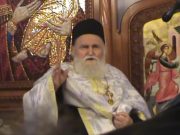



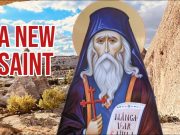

In this recording, Archimandrite Athanasios Mytilinaios (1927–2006) answers the question: “Is spiritual pride ultimately the most dangerous spiritual delusion for mankind?” Elder Athanasios warns against the Pharisaical delusion of believing we have spiritually “arrived” simply because we attend church, listen to sermons, and receive the Sacraments. Instead, he reminds us that uprooting egotism and acquiring true humility is a difficult, lifelong struggle that requires our constant effort.
Romanian translation by Elena Dinu Audio source: “Answers to questions”, no. 211 (in Greek),
https://arnion.gr/index.php/diafora-uemata/pantiseis-pori-n
Fr. Athanasios:
“I would like you to speak to me about spiritual pride. Is it ultimately the most dangerous spiritual delusion for mankind?”
Material pride does not truly exist, but spiritual pride does, because pride belongs to the realm of the spirit. And yet, this phrasing is not entirely wrong, because we have many words for pride depending on the situation we wish to illustrate. Take “material pride,” for example. (He said “spiritual” here, but we also have, he says, “material pride.”) Only we do not call it “material pride”; instead, we use another term, which is called: “the pride of life.” This expression, formed of these words, is of course found in the New Testament: “the pride of life.” It is found, if I remember correctly, in the First Epistle of St. John the Evangelist (1 John 2:16). If I remember correctly.
And what is this pride of life, meaning material pride? It is the pursuit of material or carnal things. If I want to be beautiful, if I want to be praised for my car, for my good house, for my good food, for my fine clothes, then I am indeed proud, but proud of material things, and therefore this is called “the pride of life.” The pride of life encompasses—as St. John the Evangelist says—what we see, what we hear, what we eat, and what we wear. I can tell you that television and the kind of music that cultivates the passions also belong to the pride of life, for there is music that cultivates the passions—this is a well-known fact—among other such things.
How is this pride—the pride of life—healed? Through sobriety, through simplicity, and through fasting. Fasting fights marvelously against the pride of life, for man wants to eat, he wants to dress well. But when he fasts, he shatters the grip of the pride of life.
On the other hand, we have spiritual pride, or simply put, “pride.” This belongs to the spirit. And of course, if you will, it belongs to the core of the personality, which is the ego. Never forget that the core of the personality is the ego! If the ego becomes diseased, it is called egotism, or egoism. And it is a very grave illness! Pride is one of the seven deadly sins; it is the final rung on the ladder of the passions. And as I have told you before, if some Holy Fathers, such as St. John Cassian the Roman, mention eight, it is merely a distinction made by dividing pride into vainglory and pride. The connection between vainglory and pride is like a ladder that has only a first and last rung. It is one ladder. When we say “vainglory,” we refer to the first rung of pride; when we say “pride,” we are speaking of the final rung of this passion. The last rung of the ladder.
Spiritual pride, I repeat, occupies the center of the human personality, and healing it is exceedingly difficult. That is why, as soon as we realize our ego might be sick, while there is still time, while we are able—and this even from childhood—we must fight against this disease. The medicine is humility. Humility is therefore the exact opposite of pride. And just as humility is the pillar of all virtues, so too is pride the pillar of all wickedness. For all things spring from egotism. An egotistical man is a terrible thing; so is a proud one. If someone ever realizes that things are not going well, he will fight hard to uproot this egotism and be healed. I repeat, it is a difficult struggle!
There are those who believe that once they have come to know Christianity—meaning: look, I listened to a sermon once, I went back again and again, I found something on a channel about the spiritual life, now I unfailingly go to church every Sunday and on the Great Feasts, I even have the opportunity to confess and receive Holy Communion—we think things stop there. My dear ones, this is a spiritual delusion! Meaning, our soul could be in a terrible state, yet we think we have “arrived.” This is how the Pharisees thought. They believed they had arrived in terms of piety. Do you know how much work we have left to do? For we think we have nothing else to do. We have a terrifying struggle to wage against this egotism of ours in order to acquire humility. We will fight this egoism our entire lives. It is a many-headed beast.
Let no one say, therefore, “I have arrived,” or “I have nothing else to do!” We have much work to do, this much I will tell you! Much work to do! And our life is a span of time that has not a single day too many or too few for this labor called “spiritual struggle.” Therefore, if we say we have our whole life ahead of us—”eh, I have time”—not a single day too many or too few! God gives us exactly as much time as we need to accomplish this spiritual work. So please, onward, get to work! Because we have lingered long, let us stop here!