Română
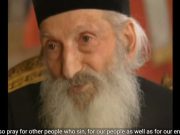


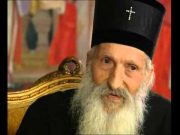





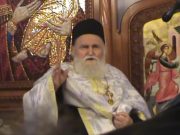




In this episode, Metropolitan Neophytos of Morphou talks about the suffering and patience of the saints like Iakovos, Porphyrios, and Paisios.This is the English translation of the sermon of His Eminence Metropolitan Neophytos of Morphou during the Divine Liturgy of Saint Panteleimon the Great Martyr and Healer, held at the celebrant church of Saint Panteleimon in the community of Kakopetria under the Metropolis of Morphou, Cyprus, given on July 20 , 2020. It was presented for otelders.org by Porphyrios.
Original source: https://youtu.be/lfAYsjgX0Ko (ΟΜΙΛΙΕΣ ΜΗΤΡΟΠΟΛΙΤΟΥ ΜΟΡΦΟΥ)
On Metropolitan Neophytos of Morphou YT channel: https://youtu.be/hXvM7wQqeCo
🔊 Listen to an English narration of this talk on Spotify and Apple Podcasts: https://open.spotify.com/show/02BTr4socgg9gwLbRZPPLE?si=78f8f270eb3c41e7
Met. Neophytos:
[Chanting the Apolytikion of St. Panteleimon]: Panteleimon, saintly champion and healer, intercede with our merciful God to grant our souls remission of sins.
Upon entering the church of Saint Panteleimon in the blessed and most historic town of Kakopetria, you are greeted by three icon stands, placed side by side. They depict the three Holy and God-bearing Fathers, canonized by the Orthodox Church in the early 21st century. These three men lived most of their lives during the latter half of the 20th century. Saint Porphyrios was perfected and [fell asleep] in 1991. Saint Iakovos Tsalikis of Evia was perfected and fell asleep ten days before Saint Porphyrios in 1991, too. And last, the prophet of our people, Saint Paisios who was perfected in 1994. Well, the 20th century, a century of World Wars, a century of increased sinfulness and of technological advancements was a time when “sin abounded” [Romans 5:20]. As a result, we, the people of the 21st century, especially our children, have inherited part of that sin. Yet in that same century, “grace abounded much more” [Romans 5:20].
In recent months, the Ecumenical Patriarchate [of Constantinople] has canonized even more Holy Fathers and Mothers. We shouldn’t forget the women saints. A great contemporary ascetic is Saint Sophia of Kleisoura (✝1974). Saint Nikephoros the Leper. Saint Hieromartyr Philoumenos of Cyprus. Just yesterday, the people from the Monastery of Jacob’s Well [where Saint Philoumenos himself was a keeper] were here and you helped them. Now, in his birthplace, Orounta, we are building a big, beautiful church in his memory. And there are many more [saints]. As you know, I would visit the three saints, [Porphyrios, Iakovos and Paisios] in my student days [in Athens]. Saint Porphyrios would ask me, “How does your Geronda, Iakovos [Tsalikis], fare?” I answered, “He is suffering from five different illnesses. He works [healing] miracles for others, but not for himself …” Saint Iakovos himself would tell me, “My son, I prefer patience for myself.”
When I told him, “Geronda, people come asking for your help and it only takes a small Paraklesis (intercession) for you to help them …” He would open his arms wide like this. For example, a man named Thanasis visited him and said, “My back is in pain.” [Saint Iakovos would turn to the holy icon of Saint David of Evia and pray]: “My dear Saint David, I implore you, this is Athanasios, our steward who tends to the needs of the church. Please help with his backache.” He would make the sign of the cross onto you and you would be healed. Yet he never asked for a cure for his own illnesses. He even had a cardiac pacemaker implanted. Moreover, Iakovos did not fall asleep an old man. He was seventy-one when he reposed. He departed for the place where he truly belonged — eternal life. The place we’ll all end up eventually. He understood … He was clever … The more pains, agonies, sorrows we endure … The more sicknesses, poverty, slander … The more of these things, the greater our patience, the richer our reward in heaven.
Saint Iakovos knew this. Porphyrios knew this. Paisios knew this. As a matter of fact, when Paisios saw a woman in the hospital, unable to bear the pains of cancer, he asked Christ, “Take the cancer from this woman and give it to me.” Christ did so. Did it pain Saint Paisios? He suffered a couple more years and his sainthood grew much, much, much more. Now, he has become a global and universal saint. From Canada all the way to Australia, And from Sweden all the way to South Africa, churches dedicated to Saint Paisios are being built. Saint Porphyrios told me, “Your Geronda (elder) Iakovos and I will fall asleep one after the other.” As soon as I heard this, being an easily-angered Cypriot, I thought to myself: “Bite your tongue! Our Geronda [Iakovos] is young — you are older than he is!” Porphyrios was eighty-four then. He read my thought and answered, “I won’t bite it … This is how it will happen and you will see it.”
Well, Iakovos fell asleep first. I was a deacon in Larnaka when the news came. Elder Iakovos had fallen asleep on the 21st of November 1991. As soon as I heard it, I said, “Now Porphyrios will fall asleep.” “How can you know this?” “He told me himself: ‘We’ll fall asleep one after the other.’” [And so it was] — Porphyrios fell asleep on the 2nd of December . The saints are able to see past and future as if it’s present. Why? Because having cleansed their [noetic] eye and their heart, they are no longer bound by the material space and time in which we suffer from illnesses, old age and other. They belong to eternity, starting from their time here on earth. That’s the reason they [are able to] see past, present and future events.
I visited Saint Iakovos two months before his repose. My exams in [Athens’] Divinity School were coming up. I was already a deacon at the time by the name of Neophytos … [pauses] Just before [during the Liturgy], while listening to the stentorian voice of our deacon reciting the Gospel reading, the one our Church has determined to be read on the feast day of Saint Panteleimon the Great Martyr and Healer. He who endured so many tortures for the love of Christ. Even though Saint Panteleimon could immobilize [his persecutors] with a single word, even though he could overturn the mighty of his time with a single prayer, … right? Just with one prayer! With a mere glance! A mere sigh! Yet he didn’t … He was looking after his own “interest.” He knew “the things good and profitable to his soul,” [quote from the Divine Liturgy]. He knew that no matter when we die, be it at forty, be it at eighty, be it at a hundred, everlasting life follows, eternal life follows.
There, we will either be bathed within the Light of Christ and we’ll enjoy it and it’ll be paradise for us. And it will be a Light that lightens, glorifies and sanctifies. Otherwise, the very same Light of the Triune God “will bother” our conscience, because we didn’t learn to love in this life. We didn’t learn how to forgive. We didn’t learn how to endure and give glory to God. My late holy mother would say, “My son, we need to ask for the Lord’s mercy in difficult times.” That is to say, the “Lord, have mercy,” prayer. “In good times, we should give glory to the Lord.” Starting from this life, unless we learn to be patient, to be grateful and to give glory to God and to ask the Lord’s mercy with the “Lord Jesus Christ, have mercy on me” prayer … Then, the Light of the Triune God, — omnipresent as it is — [It] will enter our conscience and afflict it. That’s what hell truly is.
The Light that the righteous will enjoy and rejoice in it, that same Light … Unless we learn to repent, to confess our sins, to forgive, to receive Holy Communion regularly, then it’s very likely that the exact same Light will be received by us not as enjoyment, not as light, but as fire which will burn us and constantly cauterize our conscience. And we won’t be able to bear its presence. Imagine living [forever] with someone who loves you infinitely, while you return only hatred. This is hell. [I repeat]: This is hell. It’s better to live with someone who hates you, while you love him. This is paradise. A great paradise which, however, demands great patience. There’s a medicine. I learned this medicine from another great saint of the 20th century. Saint Sophrony of Essex. He would say, “When you lack patience, it means that you have little faith. It means that you have little trust in God’s providence.”
What the older generations would often say, “God will provide …” “God first …” “God willing …” If you asked a bishop, “Where are you serving Liturgy tomorrow, dear bishop?” None of the old ones would answer, “I’ll be in Kakopetria.” Rather, they would say, “God willing, I’ll be in Kakopetria.” For I might wake up in the morning and find myself unable to go. I myself have had this happen to me. The saints taught us clearly: “When you see that you lack patience, it means that your faith is little.” Use this prayerful medicine: “My Christ, grant me the patience and the faith of the saints.” The patience and the faith of Saint Panteleimon, of Saint Iakovos, of Saint Porphyrios, of Saint Paisios. Once we manage to acquire through this humble therapeutic prayer the faith of the saints, then our patience will be increased [as a result].
Let me complete what I began saying previously about [the Gospel reading recited by the deacon]. What was the ending phrase of today’s beautiful Gospel reading? Take note that this particular Gospel reading is dedicated to all Great Martyrs, exceptionally to the Great “Anargyros” Physician Saint Panteleimon. “By your patience possess your souls” [Luke 21,19]. [One more thing,] I visited Saint Iakovos two months before his repose. I was a deacon back then. I got to see him in the hospital — sick [again]. He told me, “My dear Neophytos, this is the last time we meet on earth. God willing, may our next meeting be in heaven.” We have a rendezvous awaiting … in the future, our eternal future! I asked, “Geronda, what should I be careful with from now on?” I was only 30 years old then and brimming with health. He replied, “Once you reach your fifties, By your patience possess your souls” [Luke 21,19]. He then repeated, “By your patience possess your souls.” “By your patience possess your souls,” (he said for a third time). “Will I truly need so much patience?” I asked. He sort of smiled. Like he who knows what comes, but wants to keep it secret, because you haven’t reached the proper level of spiritual maturity yet. “Yes, that much, that much, that much [patience],” he says.
In my fifties, sicknesses arrived. Some small slanders, too. And patience arrived, too. And little by little, I learned to love patience. Patience in sickness, patience when slandered, patience as a refugee [exiled from my home]. Patience in our Metropolis’ poverty. Patience with people mocking us. Now I have to be patient when men praise me. You know well enough how it goes with men. They lift you up all the way to the belfry, and as easily cast you down and leave you in the dirt. Therefore, every single thing calls for patience. You, married ones, you are well familiar yourselves with the meaning of the phrase: (uses the wording from Psalm 39:1) “I waited patiently for my husband,” “I waited patiently for my wife,” “I waited patiently for my children,” “my neighbors,” “my aging parents behaving strangely,” “my difficult colleagues at work.” Right? “I waited patiently for the Lord and He heeded me” [Psalms 39:1].
Would Saint Panteleimon have become the Great Martyr [we revere today], had he not been patient throughout his martyrdom? Would he have his own holy icon today? Would he have so many exquisite hymns chanted [in his memory] today? And have churches built in his name a whole 1700 years past his martyrdom? Ask any child you want. That little girl over there: “Do you know who Aliki Vougiouklaki is?” “Jenny Karezi?” “Dimitris Papamichail?” These were the stars of our era. Where are they now? Who among the young has heard of them? None. What about St. Panteleimon, though ? Saint George? Saint Marina? Saint Kathrine? Saint Paisios? A generation comes, a generation goes, but the fame of the saints grows [even brighter]. This is “the idiom” of sainthood: its glory is present in heaven and it’s present on earth. Therefore, it’s in our best interest to be patient, that we may be glorified in heaven.
Now, if God is willing to glorify some while still on earth, it’s His call who gets to be glorified now and who afterwards. Saint Ephraim of Nea Makri and Saint Raphael of Mytilene waited buried in the ground for 400 years, because no one was aware of [their existence] in order for them to be glorified. Right? Thus, God appoints for all of us the proper hour of glorification. God willing, may we all, stand with these saints and all other saints alongside our Most Holy Panagia, and be glorified in the Kingdom, at the Second Coming of our Father, of our Lord Jesus Christ — for wherever Christ is, God the Father and the Holy Spirit are also there. I pray it for all of you, I ask you to pray it for us, too. However, always keep in mind: “By your patience possess your souls” [Luke 21,19]. You’ll earn your souls in glory through the itinerary of patience, of waiting, of insisting on repentance, of confessing our sins, of receiving Holy Communion regularly. After this is said and done, our good God adds strength, He adds grace, and He adds glory unto ages of ages. Many blessed years to all! “By the prayers of our Holy Fathers, Lord Jesus Christ, our God, have mercy on us.”
[Chanting the Doxastikon from the Small Vespers Service of St. Panteleimon’s Feast, Mode pl. 2: ] Glory to the Father and the Son and the Holy Spirit. “The solemn memory of the holy Unmercenary has arisen today. It invites the faithful to a mystical feast, and it ushers congregations that love to celebrate to his sacred festivities. Our wonder-working physician is here, yes, St. Panteleimon, curing everyone’s illnesses. In the contest he was steadfast, and now is earnest interceding with the Lord, for the salvation of our souls.